Core Concept
Holiday dinners looked fairly uniform a few generations ago, with most households following whatever their region or family history dictated without much debate. Over the past thirty years, that uniformity has faded as people move across the country, marry into different culinary backgrounds, and gain access to a wider range of recipes through television, social media, and specialty grocery stores. What once felt like a fixed script has become something closer to a rotating set of options, adjusted each year based on guest preferences, dietary needs, and even regional weather patterns affecting travel and gathering size. The centerpiece of the meal, long treated as a settled matter, is now frequently reconsidered from scratch. Even longtime hosts who once cooked the same dish for twenty consecutive years now find themselves fielding new requests from adult children with different tastes.
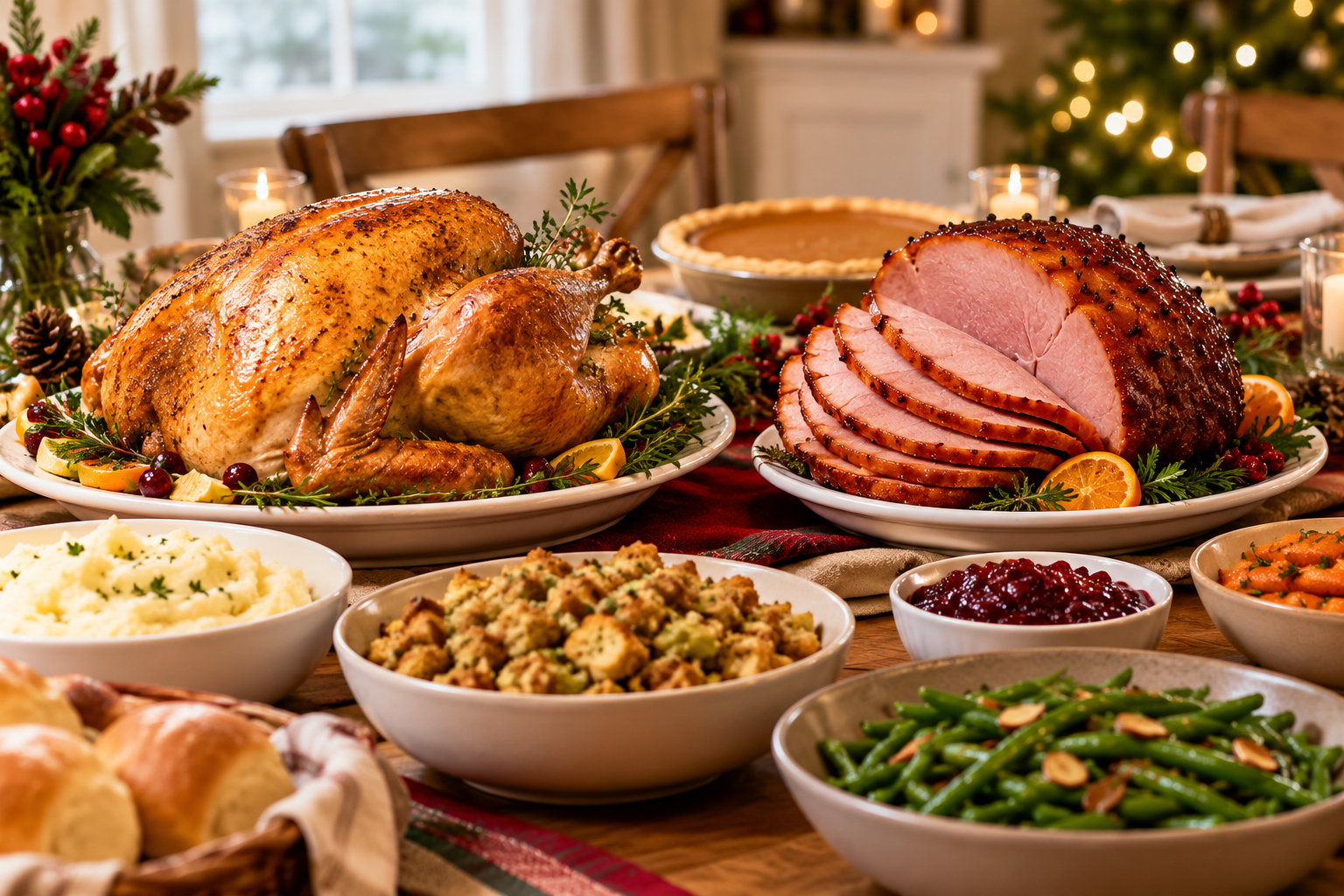
At the heart of this shift sits a simple but persistent question: which main protein actually serves a mixed group of guests best. Turkey carries strong ties to tradition and large-format cooking, while ham tends to offer easier preparation and a flavor profile that appeals to guests who find turkey dry or bland. Neither option is objectively superior, since the right choice depends on group size, cooking equipment, and how much oven space is realistically available on the day of the event. This tension between tradition and practicality is exactly why the decision keeps resurfacing every year rather than settling into permanent habit.
This same pattern shows up well beyond the main course. Side dishes have diversified just as quickly, with regional casseroles sitting next to dishes borrowed from entirely different culinary traditions on the same table. Dessert tables often reflect three or four distinct backgrounds represented among the guests rather than a single family recipe passed down without alteration. The main protein simply happens to be the most visible example of a broader trend toward blending old habits with new preferences.
The Practical Reality
Once the debate moves from theory into an actual kitchen, the calculations change quickly. Cooking times, brining requirements, and glaze options all demand attention days before the event, and getting those details wrong can throw off an entire schedule. People planning a holiday spread this year often check out Turkey or Ham for comparisons that cover cost per serving, prep time, and leftover versatility, since those factors matter more in practice than abstract tradition. Having that kind of side-by-side breakdown available before shopping day tends to prevent the last-minute scramble that derails so many holiday kitchens.
Health considerations also shape the final decision more than many hosts initially expect. Sodium content in cured ham can run considerably higher than in roasted turkey, which matters for guests managing blood pressure or following a lower-sodium diet under medical guidance. The CDC health and wellness resources page on nutrition offers useful benchmarks for daily sodium intake and protein portion sizes, information that can help a host plan a meal that satisfies both taste preferences and basic dietary guardrails. Balancing flavor, cost, and nutrition rarely produces a perfect answer, but weighing all three factors together tends to produce a meal that works for the widest range of guests at the table, which is really the goal behind every holiday gathering in the first place.
None of this needs to feel complicated once the planning starts early enough. Hosts who compare options a week or two ahead of the event tend to make calmer decisions than those scrambling the day before, regardless of which protein eventually lands on the table. Guests, for their part, generally remember the atmosphere of the gathering far more than the specific dish that anchored the menu. A well-planned meal built around clear priorities, rather than habit alone, tends to leave everyone at the table satisfied long after the dishes are cleared.